Tiếng Việt

Promoting Cooperation for Development of Le Thanh International Border Gate Economic Zone
Gia Lai province has a natural area of more than 21,577 km², making it the second-largest province in the country. It has a coastline of over 134 km and shares a land border of approximately 80.485 km with Ratanakiri province, Kingdom of Cambodia. With similar potential and comparative advantages to provinces in Northeast Cambodia, the two sides have many favorable conditions for cooperation in trade and investment development.
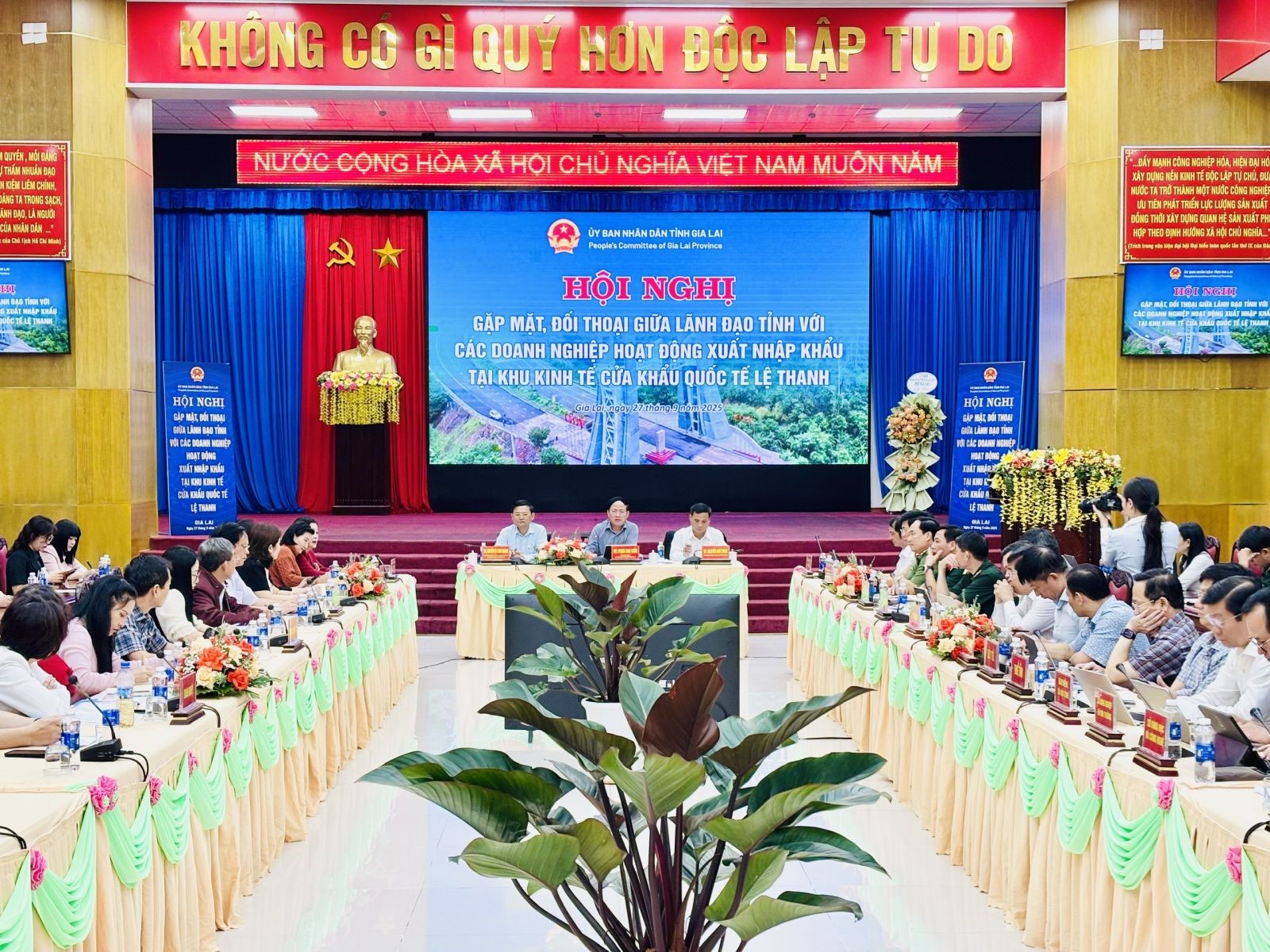
The Provincial People’s Committee holds a Meeting and Dialogue with enterprises engaged in import-export activities at Le Thanh International Border Gate Economic Zone
Gia Lai is currently one of the key agricultural, forestry, and fishery production centers of the region. The province has a well-developed agricultural sector with large-scale production areas and key products such as coffee, rubber, pepper, and cashew nuts, along with stable raw material supplies and increasing participation by domestic and foreign enterprises in processing for domestic consumption and export. This is an important foundation for Gia Lai to expand its market into Cambodia - a neighboring market with high demand for imported agricultural, forestry, and fishery products for consumption and re-export.
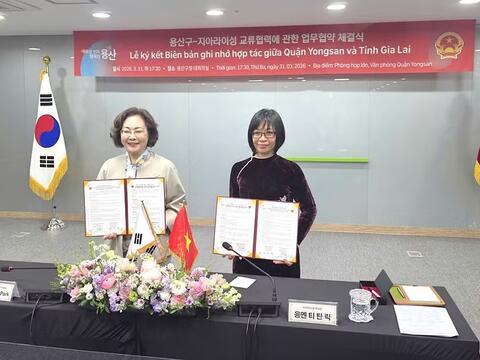
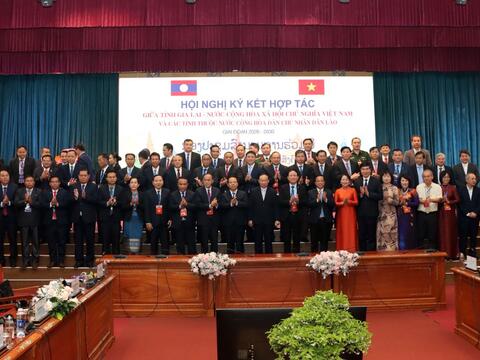
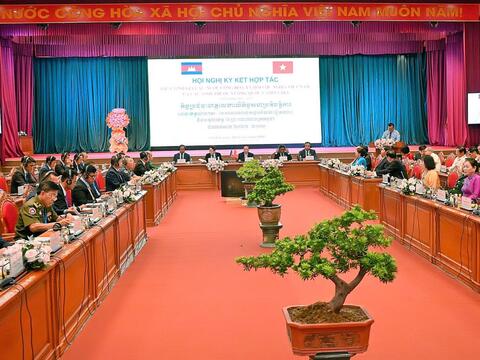
In addition to high-level bilateral agreements between the two governments, Gia Lai Provincial People’s Committee has signed memoranda of understanding on cooperation with the administrative committees of provinces in Northeast Cambodia. On this basis, relevant sectors and agencies on both sides have signed and implemented specific cooperative activities, thereby establishing a legal framework and creating favorable conditions for the development of border trade.
Currently, all import and export activities between Gia Lai Province and Cambodia are conducted through Lệ Thanh International Border Gate, which is part of Lệ Thanh International Border Gate Economic Zone. The border gate holds a strategic position as an important trade gateway on the East-West economic corridor, connecting the Northern Central Highlands of Viet Nam with Ratanakiri Province of Cambodia, and further facilitating trade with ASEAN countries through the national highway network and international transport routes. Transport infrastructure linking the border gate and the economic zone with other regions of the country and with Cambodia has been gradually developed, including National Highway 19, National Highway 14C, and the Quy Nhơn–Pleiku Expressway, which has been approved in principle by the National Assembly. Once completed and put into operation, this expressway is expected to become a major driving force for development in the Lệ Thanh International Border Gate area and to significantly enhance regional logistics connectivity. To date, Lệ Thanh International Border Gate Economic Zone has attracted 37 investment projects with a total registered capital of VND 643.9 billion. Implemented investment capital is estimated at VND 319.1 billion, accounting for 49.6% of the total registered capital.
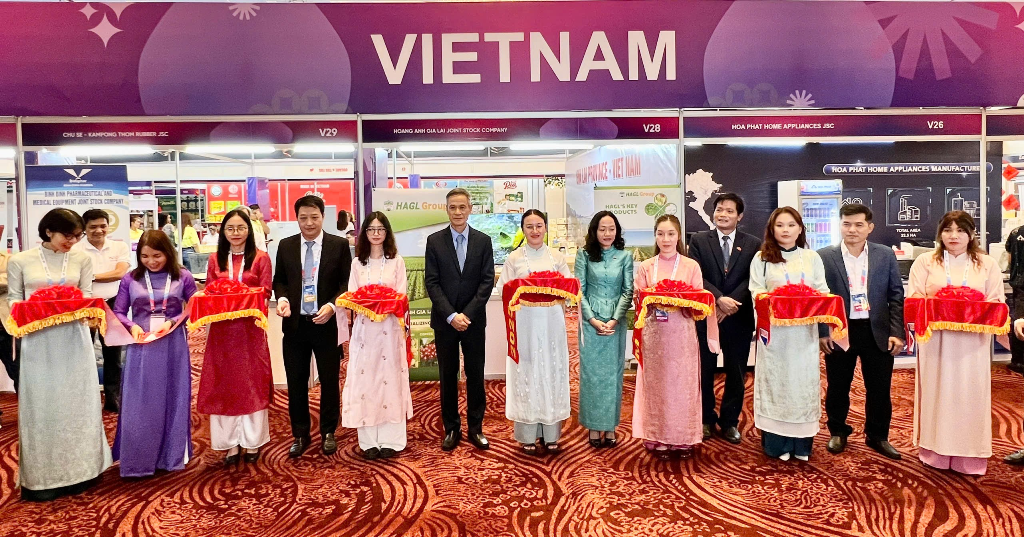
Delegates perform the ribbon-cutting ceremony to inaugurate Vietnam Trade Fair in Cambodia 2025. Source: Internet
The total import-export turnover of Gia Lai enterprises through Lệ Thanh International Border Gate has increased steadily over recent years, reaching USD 141 million in 2023, USD 202.2 million in 2024, and USD 205 million in 2025. Agricultural products account for a significant proportion of imports from Cambodia, including dried cassava, cashew nuts, natural rubber, and fresh fruit. Major export items include general merchandise, electricity, fertilizers, agricultural inputs, iron and steel, animal feed, and carton boxes serving agricultural cultivation and livestock projects of Vietnamese enterprises in Cambodia. To date, Gia Lai enterprises have invested in 19 projects in Cambodia, mainly located in the provinces of Ratanakiri, Stung Treng, Kampong Thom, Siem Reap, Preah Vihear, and Mondulkiri, with a total registered investment capital of more than USD 913.807 million. The main investment sectors include agriculture, forestry, fisheries, and construction.
Alongside these advantages, the development of Lệ Thanh International Border Gate Economic Zone in line with its potential still faces a number of difficulties and challenges. These include its distance from major economic centers, which partly limits the attraction of large-scale FDI enterprises; incomplete transport and logistics infrastructure; and the relatively small and unstable scale of border trade, which remains dependent on seasonal factors.
Speaking at the conference and dialogue between the provincial leaders and enterprises engaged in import–export activities at Le Thanh International Border Gate Economic Zone on September 27, 2025, Chairman of Gia Lai Provincial People’s Committee Pham Anh Tuan stated that the province aims to achieve import–export turnover of over USD 2 billion through Le Thanh International Border Gate by 2030. The province also identifies Le Thanh International Border Gate, connected by National Highway 19, Quy Nhơn–Pleiku expressway, to Quy Nhon and Phu My seaports, as a new growth pole and a key driving force for Gia Lai’s development.
To further promote border trade and exports to the Cambodian market in the coming period, Gia Lai Province has identified several key tasks and solutions as follows:
First, strengthen border trade infrastructure by increasing investment in the construction and upgrading of technical infrastructure and modern warehouse systems, thereby enhancing storage capacity and preservation capabilities to better support customs clearance activities in the border gate area. At the same time, promote public–private partnerships and attract private investment capital for the development of logistics infrastructure, as well as agricultural production and processing projects within Lệ Thanh International Border Gate Economic Zone.
Second, promote trade promotion and business connectivity by regularly organizing export consultancy programs and disseminating policies and regulations on border trade; implementing trade promotion activities such as border markets and trade connectivity conferences; and organizing business delegations to participate in events, fairs, and exhibitions in Cambodia, thereby strengthening linkages, expanding markets, and promoting trade cooperation between enterprises on both sides.
Third, focus on reviewing and reforming administrative procedures to facilitate the entry and exit of people and vehicles, as well as the import and export of goods, while accelerating digital transformation through the development of a “digital border gate” and a “smart border gate - one-stop system.
Fourth, encourage enterprises to leverage cross-border e-commerce to enhance online export skills, improve digital storefront management, and develop markets through reputable e-commerce platforms in Cambodia, such as Smile Shop, Little Fashion, and other similar platforms.
Fifth, strengthen information exchange between the authorities of Gia Lai Province and Ratanakiri Province in management activities in order to promptly identify difficulties and obstacles and propose appropriate solutions, thereby creating the most favorable conditions for enterprises engaged in border trade and import-export activities.



 Hot news